
The Complete Guide to Oxygen Concentrators: Everything You Need to Know in 2025
In This Guide
- What Is an Oxygen Concentrator and Who Needs One?
- How Does an Oxygen Concentrator Work? A Simple Explanation
- Types of Oxygen Concentrators: Home vs. Portable
- Home Oxygen Concentrators
- Portable Oxygen Concentrators (POCs)
- Key Features to Consider Before Choosing a Device
- Pulse Dose vs. Continuous Flow: Understanding the Difference
- The Life-Changing Benefits of Oxygen Therapy
- Renting vs. Buying an Oxygen Concentrator: Which Is Right for You?
- Choosing the Right Provider: Why KR Health Care Stands Out
- Essential Maintenance and Safety Tips
- Frequently Asked Questions (FAQ)
- Your Next Steps to Breathing Easier
Welcome to your definitive guide to oxygen concentrators in 2025. If you or a loved one has been prescribed oxygen therapy, you likely have a lot of questions. What exactly is an oxygen concentrator? How does it work? Which type is right for your lifestyle? The world of medical equipment can feel overwhelming, but it doesn’t have to be.
At KR Health Care, we believe in empowering our clients with clear, straightforward information. This guide is designed to walk you through everything you need to know, from the basic science to practical tips on choosing, using, and maintaining your device.
Let’s help you breathe easier, with confidence.
What Is an Oxygen Concentrator and Who Needs One?
An oxygen concentrator is a medical device that filters ambient air to provide a continuous supply of purified, medical-grade oxygen. Unlike traditional oxygen tanks that store a finite amount of compressed oxygen, a concentrator produces its own, making it a safer and more cost-effective solution for long-term oxygen therapy.
Doctors typically prescribe oxygen therapy for individuals with medical conditions that cause low blood oxygen levels (hypoxemia). These conditions often include:
- Chronic Obstructive Pulmonary Disease (COPD)
- Severe Asthma
- Pneumonia or COVID-19 recovery
- Cystic Fibrosis
- Pulmonary Fibrosis
- Sleep Apnea
An oxygen concentrator is not just a machine; it’s a lifeline that restores freedom, mobility, and quality of life for thousands of people.
How Does an Oxygen Concentrator Work? A Simple Explanation
You might be wondering how a machine can simply “create” oxygen. The process is quite clever and based on a simple principle: the air we breathe is only about 21% oxygen. The rest is mostly nitrogen (78%) and other gases (1%). An oxygen concentrator works by separating these gases.
Here’s a step-by-step breakdown:
- Intake: The device draws in ambient air from the room.
- Compression: The air is compressed, increasing its pressure.
- Filtration (Nitrogen Removal): The compressed air is passed through sieve beds containing a material called Zeolite. Zeolite acts like a chemical filter, trapping nitrogen molecules while allowing oxygen molecules to pass through.
- Delivery: The resulting gas is nearly pure oxygen (typically 90-96% concentrated). This purified oxygen is then delivered to the patient through a nasal cannula or mask at the prescribed flow rate.
This continuous cycle ensures a never-ending supply of oxygen as long as the device has power, eliminating the need for tank refills.
Types of Oxygen Concentrators: Home vs. Portable
Oxygen concentrators primarily come in two categories: larger units for home use and smaller, battery-powered units for on-the-go. The choice between them depends entirely on your lifestyle, mobility needs, and prescription.
Home Oxygen Concentrators
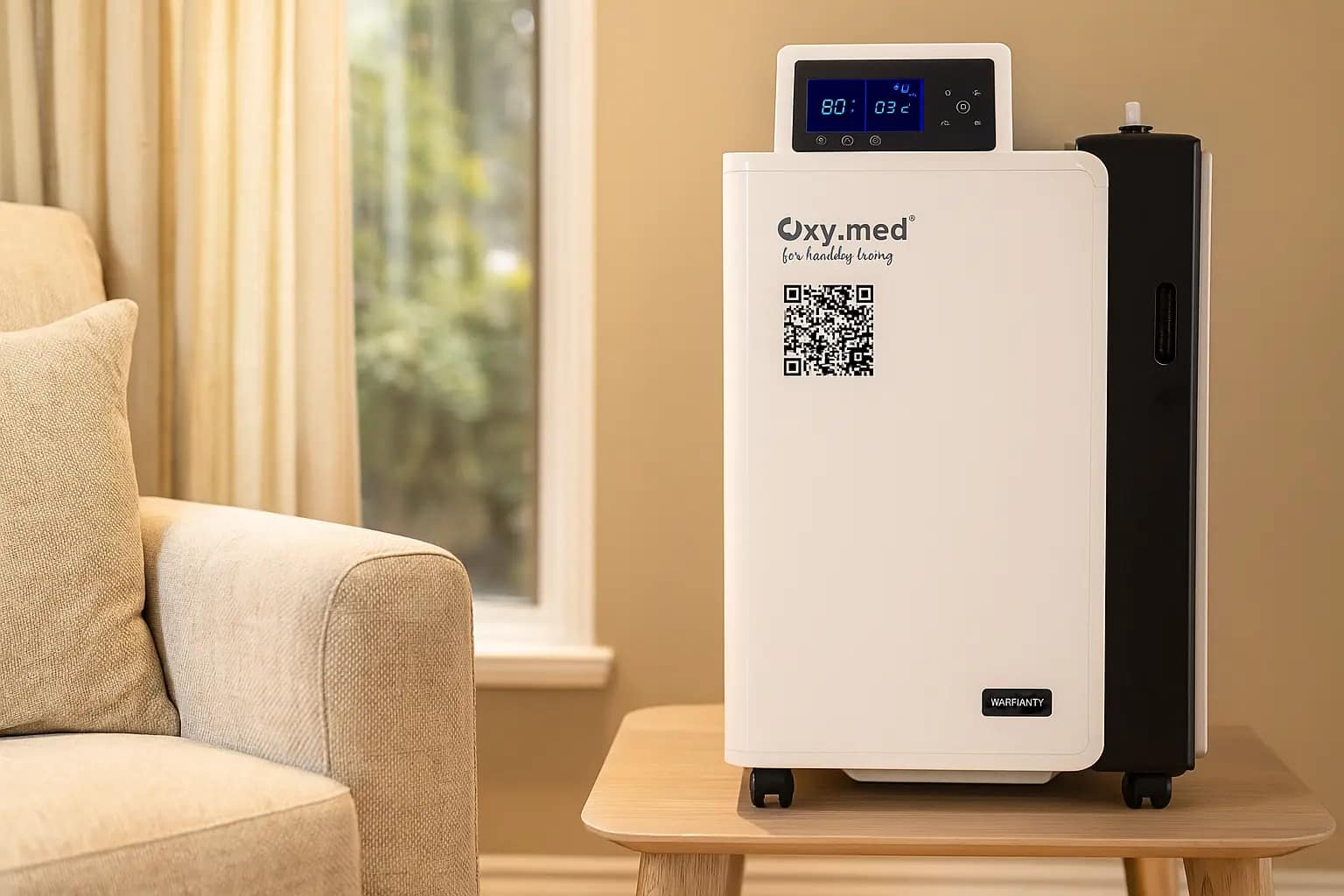
Also known as stationary concentrators, these are the workhorses of oxygen therapy. Designed for use inside the home, they are larger, heavier, and plug into a standard wall outlet. Their main advantage is the ability to provide a high, continuous flow of oxygen, often up to 10 liters per minute (LPM), making them suitable for patients with significant oxygen needs.
Portable Oxygen Concentrators (POCs)
For those who want to maintain an active lifestyle, a portable oxygen concentrator (POC) is a game-changer. These devices are lightweight, compact, and run on rechargeable batteries, allowing you to go shopping, visit family, or even travel. Most POCs operate on a “pulse dose” delivery system (more on that below), which is more efficient for battery life. Some larger POCs also offer continuous flow options.
Key Features to Consider Before Choosing a Device
Selecting the right oxygen concentrator involves matching the device’s specifications to your doctor’s prescription and your personal needs. Here are the key factors to evaluate:
- Flow Rate & Delivery Method: Does your prescription require continuous flow or pulse dose? What is the required flow rate in liters per minute (LPM)? This is the most critical factor.
- Oxygen Concentration: Ensure the device can consistently deliver high oxygen purity (typically 87-96%) at your required flow rate.
- Portability & Weight: For POCs, consider the weight and size. Can you comfortably carry it? Does it come with a convenient carry bag or cart?
- Battery Life: If choosing a POC, check the battery duration at your prescribed setting. Consider purchasing extra batteries for extended outings.
- Noise Level: Concentrators make a humming sound. Look for models with a lower decibel (dB) rating, especially for home units that will run overnight.
- Power Consumption: A more energy-efficient home model can save you money on your electricity bill over time.
Pulse Dose vs. Continuous Flow: Understanding the Difference
This is one of the most common points of confusion. The way oxygen is delivered is crucial for effective therapy.
Continuous Flow, common in home oxygen concentrators, delivers oxygen at a constant rate, regardless of your breathing pattern. If your prescription is 2 LPM, the machine delivers 2 liters of oxygen every minute.
Pulse Dose, found in most portable oxygen concentrators, is more sophisticated. It uses a sensor to detect when you begin to inhale and delivers a “pulse” or “bolus” of oxygen at that moment. It doesn’t deliver oxygen when you exhale, which conserves oxygen and extends battery life. It’s important to note that a pulse dose setting of “2” is not the same as 2 LPM continuous flow; consult your doctor to ensure a pulse dose POC can meet your needs.
The Life-Changing Benefits of Oxygen Therapy
Properly using an oxygen concentrator as prescribed by your doctor can have a profound impact on your well-being. The benefits extend far beyond simply making it easier to breathe.
- Increased Survival: For many conditions like severe COPD, long-term oxygen therapy is proven to extend life expectancy.
- Improved Mood and Sleep: Adequate oxygen levels can reduce depression, improve alertness, and lead to more restful sleep.
- Enhanced Stamina: With less shortness of breath, you can engage in more daily activities, from walking to household chores.
- Greater Freedom and Mobility: POCs empower you to leave the house, travel, and maintain social connections, fighting the isolation that can accompany chronic illness.
Buying vs. Renting an Oxygen Concentrator: Which Option Is Right for You?
One important decision when considering home oxygen therapy is whether to buy an oxygen concentrator outright or to rent/lease one. Both options have their pros and cons, and the right choice depends on your specific circumstances – such as how long you’ll need the concentrator, your budget, and your access to maintenance support. Let’s break down the factors to consider for buying versus renting:
Reasons to Buy an Oxygen Concentrator
Long-Term Need
If you or your loved one will require oxygen therapy for an extended period (for example, a chronic condition like COPD where oxygen is needed indefinitely or for many years), purchasing a concentrator is often the more economical choice in the long run. The upfront cost can be high, but over time owning the machine avoids ongoing rental fees. After the initial investment, you essentially have free oxygen aside from electricity and maintenance costs.
Freedom and Flexibility
Owning the concentrator means it’s always available to you whenever you need it. You don’t have to coordinate rental periods or worry about returning it. You can use it as much as needed, and you can modify or upgrade accessories (like getting a longer tubing or a different cannula) as you wish. If your needs change, you can also choose to sell or upgrade the unit. In contrast, a rented unit might come with usage limits or require approval to make changes.
Cost Efficiency Over Time
Let’s consider a cost comparison. A good 5-liter oxygen concentrator in India might cost around ₹30,000–₹50,000 to purchase (prices vary by brand and features). On the other hand, renting one might cost, say, ₹3,000–₹5,000 per month.
If you need the concentrator for a year, renting could cost ₹36,000–₹60,000 – roughly the same or more than buying a unit. For longer durations, buying clearly saves money. Even for shorter durations, if you anticipate needing oxygen again in the future owning a concentrator can be cost-effective as you won’t have to rent each time.
Warranty and Ownership Benefits
When you buy a concentrator from a reputable supplier, you typically get a warranty (as discussed earlier, often 1–3 years). This means any major repairs or replacements within that period are covered.
Some sellers like KR Health Care include additional perks for buyers for instance, they might offer a free maintenance service annually or provide a backup machine if yours is being serviced under warranty.
Owning the machine also means you can keep it well-maintained and serviced as you see fit, potentially extending its life. You have a sense of security knowing you have a dedicated medical device for your use.
No Dependency on Supplier for Longevity
If you purchase, you’re not tied to a rental company’s availability. In situations where demand surges (like during a pandemic), rental units might be scarce, but if you already own one, you’re covered. You also don’t have to worry about the rental company possibly discontinuing service or increasing rates in the future.
Reasons to Rent an Oxygen Concentrator
Short-Term or Temporary Need
Renting is ideal if the need for oxygen is expected to be short-term. For example, if someone is recovering from pneumonia or COVID-19 and only needs oxygen support for a few weeks to a couple of months, renting can be more cost-effective than buying. You pay only for the period you need it, and then you can return the unit. This avoids the expense of buying a machine that would sit unused after recovery.
Lower Upfront Cost
The initial cost of renting is much lower than buying. Instead of paying tens of thousands of rupees at once, you might pay a few thousand rupees per month. This can be easier on the budget, especially if you’re not sure how long you’ll need the concentrator. Many rental companies also offer flexible plans (weekly or monthly rentals) to suit your needs.
Included Maintenance and Service
When you rent from a good provider, they often handle maintenance. They may deliver a unit that’s already serviced and calibrated, and if any issues arise during the rental period, they will fix or replace the machine at no extra charge.
For instance, KR Health Care’s rental service in Bangalore includes 24/7 delivery, no deposit, and they ensure the equipment is maintained – if your rented concentrator breaks down, they can bring a replacement quickly.
This can give peace of mind, as you don’t have to troubleshoot or repair the machine yourself. Essentially, the supplier takes responsibility for the device’s performance during the rental term.
Avoidance of Long-Term Commitment
Renting allows you to test the waters without a big commitment. If you’re unsure about the long-term prognosis or if the doctor hasn’t yet determined if oxygen therapy will be permanent, renting gives you flexibility.
You can continue renting month-to-month until you have more clarity. If it turns out you no longer need oxygen, you simply return the unit. There’s no hassle of selling a used concentrator or storing it.
Renting also means you’re not stuck with an older model some rental companies might even allow you to upgrade to a newer model if available, as your needs change.
No Resale Hassle
If you buy a concentrator and later no longer need it, you have to deal with selling it or disposing of it. Medical equipment can be tricky to resell quickly, and you might not get a good price. With renting, there is no such problem you return it when done. This is especially convenient for out-of-town visitors or patients who may relocate; you won’t have to transport the machine or find a buyer in a new city.
Cost Analysis Example
To illustrate the cost difference, let’s take a hypothetical scenario: Suppose a 5L oxygen concentrator costs ₹40,000 to buy, and the rental rate is ₹4,000 per month. If you need it for 6 months:
- Buying: You pay ₹40,000 upfront. After 6 months, you still own the machine (which you could potentially resell for, say, ₹25,000 if it’s in good condition). So your net cost might be around ₹15,000 (not counting maintenance or electricity).
- Renting: You pay ₹4,000 x 6 = ₹24,000 over 6 months. At the end, you return the unit and have no further costs or asset.
In this case, buying and then reselling is cheaper than renting for 6 months. However, if you only needed it for 1 month, renting (₹4,000) is far cheaper than buying (₹40,000) and then selling (maybe getting ₹30,000 back, net loss ₹10,000).
So the breakeven point depends on how long you need the concentrator. Many people find that if they’ll need oxygen for more than 3–6 months, buying starts to make more financial sense, whereas anything shorter than that, renting is preferable.
Our Recommendation: If the need for oxygen is expected to be long-term or permanent, purchasing a concentrator is generally the better choice due to long-term cost savings and the convenience of having your own device. If the need is short-term months or uncertain, renting provides flexibility and lower immediate cost. Many people also choose a hybrid approach: they might rent initially while waiting for a purchased unit to arrive, or while confirming the need, and then purchase for ongoing use. Some rental companies in Bangalore even allow you to apply a portion of your rental fees toward the purchase price if you decide to buy later – this can be a useful middle ground.
Ultimately, consider your personal situation, financial plan, and how long the doctor anticipates oxygen therapy will be needed. Discuss with your healthcare provider and supplier – they might have insights or programs to help. For example, KR Health Care in Bangalore offers both options: you can rent for 3, 6, or 12 months with flexible terms, or you can buy a concentrator outright (with attractive warranties and support).
Choosing the Right Oxygen Concentrator Provider in Bangalore, Mysore, or Hyderabad
Selecting the right provider or supplier for your oxygen concentrator is just as important as choosing the right device. A good provider will not only offer quality equipment but also ensure timely service, support, and guidance throughout your oxygen therapy journey.
If you’re based in Bangalore, Mysore, or Hyderabad, you have several options, but it’s wise to pick a provider that is experienced, locally accessible, and customer-focused.
Here are some factors to consider and a spotlight on one recommended provider, KR Health Care, which serves these cities:
What to Look for in a Provider
Reputation and Experience
Look for a supplier that has a solid reputation in the medical equipment field. Experience matters – a company that has been providing oxygen concentrators for several years is likely to know the products well and handle customer needs efficiently.
Check reviews or testimonials from other customers. For instance, KR Health Care, established in 2010, has over 700 reviews with an average of 4.8 stars on Google. Such a track record indicates a history of satisfied customers and reliability.
Range of Products
Ensure the provider offers the type of concentrator you need. If you require a stationary 10L unit for high flow, make sure they carry it. If you want a portable model, they should have reputable POCs in stock.
A good provider will have multiple brands and models to choose from, so you can get one that fits your prescription and preferences. KR Health Care deals with a wide range of medical equipment including oxygen concentrators both stationary and portable, oxygen cylinders, BiPAP/CPAP machines, hospital beds, wheelchairs, and more.
Their wide product range means they can cater to various needs and even bundle services for example, if you also need a nebulizer or pulse oximeter, they can provide those too.
Sales and Rental Options
As discussed, some people prefer to buy while others prefer to rent. The ideal provider should offer both options. This flexibility allows you to choose what suits you best. They might also have rental-to-own programs or financing options for purchases. KR Health Care explicitly provides both sales and hiring (rental) services for medical equipment to hospitals and home patients.
This means whether you need a short-term rental for recovery or want to purchase a unit for long-term home use, they can accommodate you. They even mention rental packages for 3, 6, 12 months, etc., which is helpful for planning.
Quality and Warranty
A trustworthy provider will stock superior quality products with warranty coverage. They should be transparent about the brands they sell – sticking to well-known, certified brands rather than unknown cheap imports.
Ask about the warranty period and what it covers. KR Health Care highlights that they provide products with warranty and at the lowest market cost.
For example, on oxygen concentrators, they might offer a standard 1-year warranty plus an extended warranty on the compressor (some models come with 3-year compressor warranty).
They also mention having fully trained technical staff for installation and supply of equipment, which is important when you purchase or rent, they will deliver it to your home and set it up properly, ensuring you know how to use it. This level of service adds to the value.
Service Network and Support
One of the biggest advantages of choosing a local or regional provider is their service network. In case your concentrator needs maintenance or breaks down, you want the provider to respond quickly.
Check if they have service centers or technicians in your city. KR Health Care has multiple branches in Bangalore (Deepanjalinagar, HBR Layout, Banasawadi, Bannerughatta Road, and Mysore) and their head office/warehouse in Vijayanagar, Bangalore.
This local presence means they can deliver and service equipment faster in Bangalore and Mysore. For Hyderabad, if they don’t have a physical branch, they might still service it via a partner or by shipping – it’s worth confirming. But even if you’re in Hyderabad, working with a provider like KR (which is well-established) could be beneficial if they have a good logistics setup, especially if you value the quality of service they provide.
Customer Service and Accessibility
The provider should be easy to reach and responsive. Emergencies can happen at any time – for instance, a concentrator might stop working late at night. A provider that offers 24/7 support is invaluable.
KR Health Care states that they work 24/7 round the clock which means you can call them anytime for assistance. They also mention that products will be delivered within 4–6 hours after confirming the order (within Bangalore) and that they take no deposit for rentals.
These policies show a customer-centric approach: quick delivery in emergencies and no extra financial burden (like a large deposit) to get the equipment. Such attentiveness to customer needs is something to look for in a provider.
Expertise and Guidance
A good provider doesn’t just sell or rent equipment – they act as a resource for the patient and caregiver. They should be able to answer questions about how to use the concentrator, how to troubleshoot minor issues, and when to seek medical advice.
Their staff should be trained as KR Health Care’s staff is so they can educate you on proper usage and safety. This aspect is crucial because it ensures you’re getting reliable information. You can consider them an extension of your healthcare team for the equipment side of things.
KR Health Care – A Trusted Provider in Bangalore/Mysore
As an example of a reliable provider, KR Health Care embodies many of the qualities above. Here’s a quick recap of why they are a recommended choice, especially for those in Bangalore and Mysore:
Established and Trusted
With over 15 years in the business and hundreds of positive reviews, KR Health Care has built a strong reputation for delivering quality medical equipment and services. Their high Google rating (4.8 stars) reflects customer satisfaction with both products and service.
Wide Selection
They carry a comprehensive range of medical devices, including various models of oxygen concentrators (from 5L stationary units to portable concentrators), making it likely they have the right device for your specific need. They are also distributors for leading brands, so you can get genuine products with manufacturer support.
Sales and Rentals
Whether you need to buy or rent, KR Health Care offers flexible options. Renting from them is hassle-free (no deposit, quick delivery) and buying comes with warranty and after-sales support. This flexibility is ideal for different situations – short-term rental for recovery or long-term purchase for chronic needs.
Quality and Warranty
They emphasize superior quality and provide warranty on all products. Knowing that your concentrator is backed by a warranty and that they have technical staff to service it gives peace of mind. Their mention of a 3-year warranty on concentrators (likely on the compressor) and spare machine during service is particularly reassuring – it shows they stand by their products and understand the critical nature of the equipment.
Local Presence and Service
With multiple branches in Bangalore and a presence in Mysore. KR Health Care can provide fast service and support to customers in these cities. They deliver within hours and are available 24/7,which is extremely important for urgent needs.
If you’re in Hyderabad, while KR Health Care may not have a branch there, you might still consider reaching out to them some companies do deliver across cities or look for a similar provider in Hyderabad that offers the same level of service. The criteria above can guide you in evaluating Hyderabad-based suppliers as well.
Customer-Centric Policies
No deposit for rentals, quick delivery, and a focus on affordability (lowest market cost) while maintaining quality all point to a customer-first approach. They seem committed to bringing world-class medical care into patients’ homes at affordable cost, which aligns with what most people seek when they need home medical equipment.
If you’re in Bangalore or Mysore, KR Health Care is certainly worth considering for your oxygen concentrator needs. For those in Hyderabad, look for providers with similar profiles perhaps a well-reviewed local medical equipment supplier that offers concentrators with warranties and service support. You may also check if national chains or the manufacturers themselves have authorized dealers in your city.
Essential Maintenance and Safety Tips
To ensure your concentrator runs efficiently and safely, regular maintenance is key. For more detailed information, always refer to your device’s manual and consult resources like the U.S. Food and Drug Administration (FDA) guidelines.
- Clean the Filter: The gross particle filter, which captures dust and hair, should be washed weekly with soap and water. Ensure it’s completely dry before reinserting.
- Wipe Down the Exterior: Use a damp cloth to clean the outside of the unit regularly.
- Check Your Cannula/Mask: Replace your nasal cannula and tubing every 2-4 weeks, or as recommended by your provider, to prevent infection.
- Ensure Proper Ventilation: Keep the concentrator in an open space, at least 1-2 feet away from walls and furniture, to allow for proper air intake.
- Safety First: Oxygen supports combustion. NEVER smoke or allow open flames (like candles or gas stoves) near a person using an oxygen concentrator.
Frequently Asked Questions
Here are answers to some common questions we receive at KR Health Care.
1. Can I use an oxygen concentrator while I sleep?
Absolutely. Many people are prescribed oxygen for nocturnal use, especially those with sleep apnea or severe COPD. Home concentrators are designed for 24/7 operation.
2. Is it safe to travel with a portable oxygen concentrator?
Yes! Most POCs are FAA-approved for air travel. However, you must notify the airline in advance and bring enough batteries to last 150% of your flight time.
3. Does an oxygen concentrator increase my electricity bill?
It will increase your bill, but modern concentrators are becoming more energy-efficient. A typical 5 LPM home unit uses about the same power as a desktop computer.
4. Do I need a prescription to get an oxygen concentrator?
Yes. In most countries, including India, oxygen is considered a drug. You must have a valid prescription from a doctor to rent or buy an oxygen concentrator.
Your Next Steps to Breathing Easier
Navigating the world of oxygen therapy can be a significant life adjustment, but with the right information and support, it is entirely manageable. An oxygen concentrator is a remarkable piece of technology that can restore independence and improve your overall health.
Remember to work closely with your doctor to understand your prescription and choose a device that fits your medical needs and lifestyle. If you’re in Bangalore or nearby, the team at KR Health Care is here to help you every step of the way—from choosing the right model to providing 24/7 support.
Ready to take the next step? Contact us today for a free consultation or to learn more about our flexible rental and purchase options.
About the Author
This guide was prepared by the medical content team at KR Health Care, a leading provider of respiratory care solutions in Bangalore. Our mission is to provide reliable medical equipment and compassionate support to help our community live healthier, more active lives.
Kishore K is a healthcare and medical equipment specialist with 18 years of industry experience, including 10 years with KR Health Care. He has extensive expertise in medical equipment rentals and sales, helping hospitals, healthcare professionals, and home-care patients access reliable and cost-effective healthcare solutions. Under his leadership, KR Health Care has become a trusted provider of oxygen concentrators, oxygen cylinders, BiPAP and CPAP machines, hospital beds, wheelchairs, and other medical equipment. Recognized with IndiaMART TrustSEAL and Justdial Recognition, Kishore K is committed to delivering quality healthcare solutions and exceptional customer service across Bengaluru, Hyderabad, Mysore, and nearby regions.