
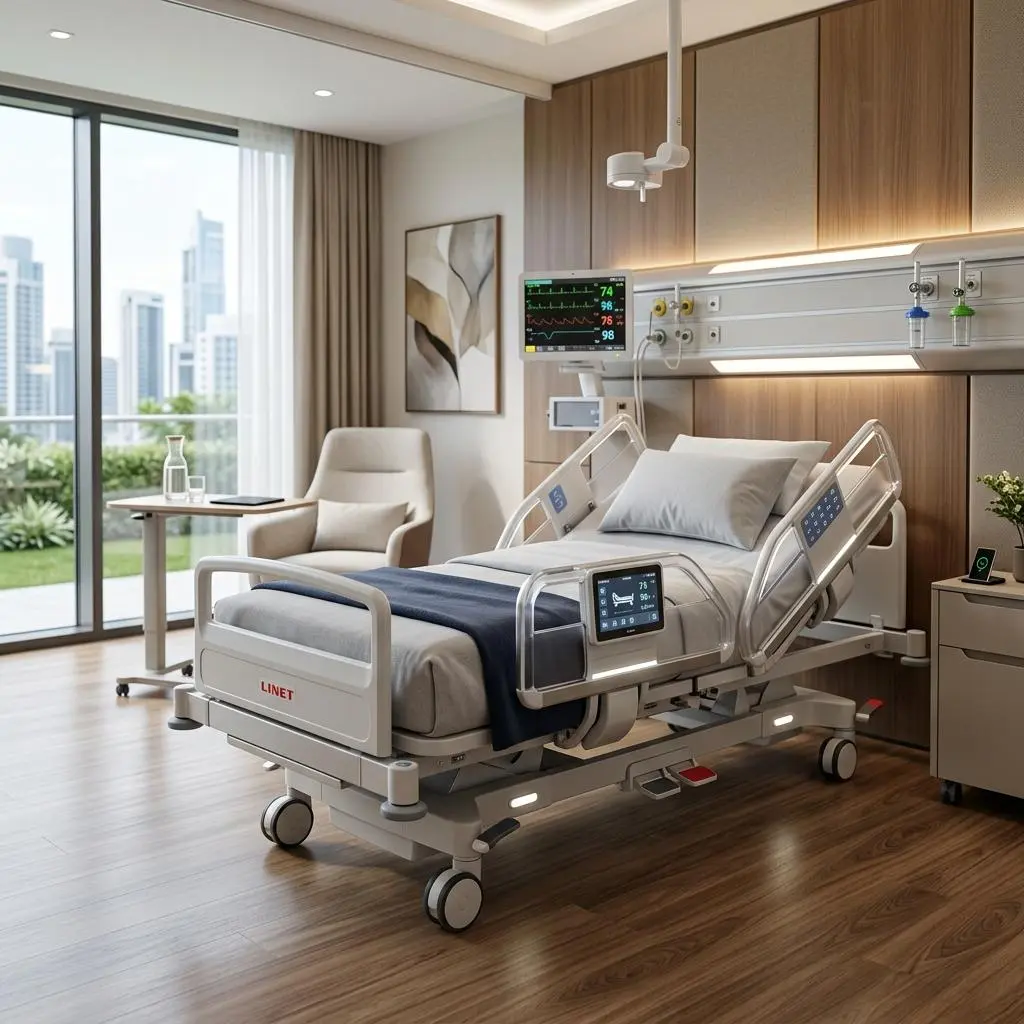
Types of Hospital Beds: A Complete Guide to Different Beds, Features and Uses
Choosing a hospital bed is not just about finding a comfortable place for someone to rest. The right bed can make everyday care easier for patients, family members and healthcare professionals. For someone recovering after surgery, an elderly person with limited mobility or a patient who needs long-term care, the bed’s design and adjustment features can make a meaningful difference to daily routines.
However, not all hospital beds are the same. Some have simple manual controls, while others offer electric adjustments, height control and specialised positioning features. Certain models are designed for intensive care, maternity wards or patients who need additional support.
Understanding the different types of hospital beds, their features and their uses can help you make a more informed decision. This guide explains the common options and what to consider before renting or purchasing one.
What Is a Hospital Bed?
A hospital bed is a specially designed medical bed that allows patients to rest in different positions while making routine caregiving easier. Unlike an ordinary bed, it may have adjustable sections, side rails, locking wheels and height-control mechanisms.
Depending on its design, a hospital bed can help caregivers adjust the patient’s position, assist with transfers and provide easier access during daily care.
Hospital beds are commonly used in:
- Hospitals and nursing homes
- Intensive care units
- Rehabilitation centres
- Home healthcare settings
- Long-term patient care facilities
The right model depends on the patient’s mobility, care requirements and the level of assistance available.
12 Different Types of Hospital Beds and Their Uses
Hospital beds are available in several designs, each intended for different patient-care situations. Here are some commonly used types.
1. Plain Hospital Beds
Plain hospital beds have a basic, fixed sleeping platform without advanced adjustment mechanisms. They are generally suitable for situations where patients do not require frequent changes in sleeping position.
Key features:
- Simple and practical construction
- Fixed bed platform
- Easy-to-understand design
- Generally more economical than advanced electric models
Common uses: General wards, basic patient-care facilities and situations where advanced positioning features are not required.
2. Manual Hospital Beds
Manual hospital beds use hand-operated cranks to adjust the backrest, leg section or bed height, depending on the model.
They are useful in care settings where electrical adjustments are not necessary or where caregivers are available to operate the controls.
Key features:
- Hand-operated adjustment mechanism
- No electric motor required for positioning
- Straightforward operation
- Different adjustment options depending on the model
Common uses: General hospital wards, nursing homes and selected home-care situations.
3. Semi-Electric Hospital Beds
Semi-electric hospital beds combine manual and electrical controls. Usually, the head and leg sections can be adjusted using an electric remote, while the overall bed height is controlled manually.
This arrangement offers more convenience than a fully manual model without requiring every adjustment to be motorised.
Key features:
- Electric backrest adjustment
- Electric leg-section adjustment
- Manual height adjustment in typical configurations
- Remote-operated positioning
Common uses: Home healthcare, recovery care and general patient-care environments.
4. Fully Electric Hospital Beds
Fully electric hospital beds use motors to control the available bed adjustments. Depending on the model, users can raise or lower the backrest, leg section and overall bed height using a remote.
These beds can make frequent repositioning easier for caregivers and may provide greater convenience for patients who need regular assistance.
Key features:
- Motorised positioning
- Remote-controlled operation
- Adjustable height on suitable models
- Reduced manual effort for caregivers
Common uses: Hospitals, rehabilitation centres and home-care environments where frequent adjustments are needed.
5. Fowler Hospital Beds
Fowler beds are designed to raise the patient’s upper body and, in many models, the leg section as well. This allows patients to move between lying and more upright positions.
They are available in different manual and electric configurations.
Key features:
- Adjustable backrest
- Leg-section adjustment on suitable models
- Different reclining positions
- Manual or electric operating options
Common uses: General wards, recovery care and home healthcare.
6. ICU Hospital Beds
ICU beds are specialised beds designed for patients who require close monitoring and intensive medical care.
Depending on the model, they may include advanced positioning controls, emergency CPR release, weighing systems and nurse-control features.
Key features:
- Multiple positioning functions
- Emergency CPR release on suitable models
- Side rails and locking wheels
- Additional controls for healthcare staff
- Compatibility with selected medical accessories
Common uses: Intensive care units and high-dependency patient-care areas.
7. Three-Function Electric Hospital Beds
Three-function electric beds generally provide three main adjustments: backrest elevation, leg-section elevation and overall bed-height adjustment.
These functions help caregivers position patients more conveniently during routine care.
Key features:
- Three motorised adjustment functions
- Remote-controlled operation
- Adjustable height
- Backrest and leg-section positioning
Common uses: Hospitals, nursing facilities and home-care settings requiring multiple adjustments.
8. Five-Function Hospital Beds
Five-function hospital beds offer additional positioning options compared with basic models. Depending on their design, they may include backrest adjustment, leg adjustment, height control, Trendelenburg and reverse Trendelenburg positioning.
These functions are intended for specific patient-care requirements and should be selected according to the manufacturer’s specifications and clinical guidance.
Key features:
- Multiple adjustment functions
- Advanced positioning options
- Manual or electric configurations
- Additional flexibility for caregivers
Common uses: Hospitals and specialised care environments.
9. Bariatric Hospital Beds
Bariatric hospital beds are designed for patients who require a wider sleeping platform and a higher weight capacity than a standard bed provides.
They generally have reinforced frames and larger dimensions. The safe working load should always be checked before selecting a model.
Key features:
- Wider sleeping surface
- Reinforced construction
- Higher specified weight capacity
- Suitable dimensions for the intended patient
Common uses: Specialised hospital wards and patient-care facilities.
10. Paediatric Hospital Beds
Paediatric hospital beds are designed specifically for infants and children. Their dimensions and safety features differ from standard adult hospital beds.
Depending on the patient’s age and requirements, they may include enclosed sides or specially designed safety barriers.
Key features:
- Child-appropriate dimensions
- Age-specific safety design
- Suitable side barriers or enclosures
- Different configurations for infants and older children
Common uses: Children’s hospitals, paediatric wards and specialised healthcare facilities.
11. Maternity and Delivery Beds
Maternity beds are designed to support women during labour, delivery and related medical care.
Depending on the model, they may include adjustable sections, removable components and positioning features that assist healthcare professionals during delivery.
Key features:
- Adjustable positioning
- Specialised delivery configuration
- Accessible design for healthcare staff
- Model-specific support features
Common uses: Maternity hospitals, labour rooms and delivery units.
12. Orthopaedic Traction Beds
Orthopaedic traction beds are designed for patients who require specialised positioning or traction as part of an orthopaedic treatment plan.
They may include traction frames and attachment points for supporting prescribed traction equipment.
Key features:
- Traction attachment arrangements
- Adjustable positioning
- Specialised frame design
- Compatibility with prescribed traction equipment
Common uses: Orthopaedic departments and specialised patient-care facilities.
Manual vs Semi-Electric vs Fully Electric Hospital Beds
One common question when selecting a hospital bed is whether to choose a manual, semi-electric or fully electric model.
Although all three can support patient care, their operating mechanisms are different.
| Feature | Manual Bed | Semi-Electric Bed | Fully Electric Bed |
|---|---|---|---|
| Operation | Hand crank | Manual and electric | Electric |
| Backrest adjustment | Manual | Usually electric | Electric |
| Leg adjustment | Manual | Usually electric | Electric |
| Height adjustment | Manual | Usually manual | Electric |
| Caregiver effort | More | Moderate | Less for adjustments |
| Typical cost | Lower | Moderate | Higher |
The best option depends on the frequency of adjustments, patient mobility, caregiver availability and budget.
Understanding Fowler and Semi-Fowler Bed Positions
Fowler and Semi-Fowler are commonly used terms in patient positioning. They describe the position of the patient’s upper body rather than completely separate categories of hospital equipment.
Semi-Fowler position: The upper body is generally elevated by approximately 30–45 degrees.
Fowler position: The upper body is raised to a more upright position, commonly around 45–60 degrees.
These positions may be used for different care activities, depending on the patient’s condition and clinical instructions.
Not every hospital bed offers the same range of adjustments. Always check the model’s available positioning functions.
How to Choose the Right Hospital Bed?
Before renting or purchasing a hospital bed, consider the patient’s actual care requirements instead of choosing a model based only on its appearance or price.
Here are some important factors to check.
1. Patient mobility: Consider whether the patient can get in and out of bed independently or requires assistance.
2. Adjustment requirements: Check whether manual, semi-electric or fully electric controls are appropriate for the frequency of repositioning.
3. Weight capacity: Verify the manufacturer’s specified safe working load. Never assume that all beds support the same weight.
4. Safety features: Check the side rails, locking wheels, frame stability and available safety mechanisms.
5. Mattress compatibility: Make sure the mattress fits the bed correctly and is appropriate for the patient’s care requirements.
6. Room dimensions: Measure the available space, including clearance for caregivers and equipment.
7. Caregiver convenience: Consider how easily the bed can be adjusted, moved and maintained.
8. Rental or purchase requirements: If the bed is needed temporarily, compare rental duration, delivery, installation, maintenance and collection arrangements.
For patients with specific medical requirements, consult a qualified healthcare professional before selecting a bed.
Hospital Beds for Home Care: What Should You Consider?
Hospital beds are not limited to hospitals. They are also used at home for elderly individuals, patients recovering after surgery and people who need assistance with everyday mobility.
However, choosing a home-care bed requires a little planning.
Start by checking the available room space and the patient’s mobility. If the patient needs frequent changes in position, an adjustable model may be more convenient. If basic positioning is sufficient and a caregiver is available, a manual bed may be worth considering.
You should also check whether the bed comes with a suitable mattress, side rails and locking wheels.
If the requirement is temporary, renting may be a practical alternative to purchasing. Before confirming a rental, understand the monthly charges, rental period, delivery arrangements and maintenance support.
Frequently Asked Questions About Hospital Beds
1. What are the most common types of hospital beds?
Common types include plain, manual, semi-electric, fully electric, Fowler, ICU, bariatric, paediatric and multi-function hospital beds. Each is designed for different patient-care requirements.
2. Which type of hospital bed is suitable for home use?
Manual, semi-electric and fully electric beds can all be considered for home care. The right option depends on patient mobility, adjustment requirements, available space and caregiver support.
3. What is the difference between a manual and an electric hospital bed?
A manual hospital bed uses hand-operated cranks to change its position. An electric hospital bed uses motorised controls, usually operated through a remote.
4. What is a three-function hospital bed?
A three-function hospital bed generally allows adjustment of the backrest, leg section and overall bed height.
5. What is a five-function hospital bed?
A five-function bed generally provides backrest, leg, height, Trendelenburg and reverse Trendelenburg adjustments, depending on the model.
6. What is the difference between Fowler and Semi-Fowler positions?
Semi-Fowler generally involves raising the upper body by around 30–45 degrees, while Fowler describes a more upright position. The exact angle and available adjustments depend on the care instructions and bed design.
7. Can I rent a hospital bed instead of buying one?
Yes. Renting can be useful when a hospital bed is required for a temporary recovery period. Compare the rental charges, delivery, installation and maintenance terms before making a decision.
8. What features should I check before renting a hospital bed?
Check the bed’s adjustment mechanism, weight capacity, mattress condition, side rails, locking wheels, overall stability and rental conditions.
Find a Suitable Hospital Bed with KR Healthcare
Selecting a hospital bed becomes easier when you understand the patient’s requirements and the available features.
KR Healthcare provides medical equipment for rental and purchase, including hospital beds for home-care and healthcare requirements. Whether you need a basic manual bed or an adjustable electric model, it is important to compare the available options before making a decision.
If you are looking for hospital beds for rent or sale in Bangalore, explore the available options from KR Healthcare and contact the team to discuss your requirements.
Visit KR Healthcare to enquire about hospital bed rental and purchase options.
bers and healthcare professionals. For someone recovering after surgery, an elderly person with limited mobility or a patient who needs long-term care, the bed’s design and adjustment features can make a meaningful difference to daily routines.
However, not all hospital beds are the same. Some have simple manual controls, while others offer electric adjustments, height control and specialised positioning features. Certain models are designed for intensive care, maternity wards or patients who need additional support.
Understanding the different types of hospital beds, their features and their uses can help you make a more informed decision. This guide explains the common options and what to consider before renting or purchasing one.
What Is a Hospital Bed?
A hospital bed is a specially designed medical bed that allows patients to rest in different positions while making routine caregiving easier. Unlike an ordinary bed, it may have adjustable sections, side rails, locking wheels and height-control mechanisms.
Depending on its design, a hospital bed can help caregivers adjust the patient’s position, assist with transfers and provide easier access during daily care.
Hospital beds are commonly used in:
- Hospitals and nursing homes
- Intensive care units
- Rehabilitation centres
- Home healthcare settings
- Long-term patient care facilities
The right model depends on the patient’s mobility, care requirements and the level of assistance available.
12 Different Types of Hospital Beds and Their Uses
Hospital beds are available in several designs, each intended for different patient-care situations. Here are some commonly used types.
1. Plain Hospital Beds
Plain hospital beds have a basic, fixed sleeping platform without advanced adjustment mechanisms. They are generally suitable for situations where patients do not require frequent changes in sleeping position.
Key features:
- Simple and practical construction
- Fixed bed platform
- Easy-to-understand design
- Generally more economical than advanced electric models
Common uses: General wards, basic patient-care facilities and situations where advanced positioning features are not required.
2. Manual Hospital Beds
Manual hospital beds use hand-operated cranks to adjust the backrest, leg section or bed height, depending on the model.
They are useful in care settings where electrical adjustments are not necessary or where caregivers are available to operate the controls.
Key features:
- Hand-operated adjustment mechanism
- No electric motor required for positioning
- Straightforward operation
- Different adjustment options depending on the model
Common uses: General hospital wards, nursing homes and selected home-care situations.
3. Semi-Electric Hospital Beds
Semi-electric hospital beds combine manual and electrical controls. Usually, the head and leg sections can be adjusted using an electric remote, while the overall bed height is controlled manually.
This arrangement offers more convenience than a fully manual model without requiring every adjustment to be motorised.
Key features:
- Electric backrest adjustment
- Electric leg-section adjustment
- Manual height adjustment in typical configurations
- Remote-operated positioning
Common uses: Home healthcare, recovery care and general patient-care environments.
4. Fully Electric Hospital Beds
Fully electric hospital beds use motors to control the available bed adjustments. Depending on the model, users can raise or lower the backrest, leg section and overall bed height using a remote.
These beds can make frequent repositioning easier for caregivers and may provide greater convenience for patients who need regular assistance.
Key features:
- Motorised positioning
- Remote-controlled operation
- Adjustable height on suitable models
- Reduced manual effort for caregivers
Common uses: Hospitals, rehabilitation centres and home-care environments where frequent adjustments are needed.
5. Fowler Hospital Beds
Fowler beds are designed to raise the patient’s upper body and, in many models, the leg section as well. This allows patients to move between lying and more upright positions.
They are available in different manual and electric configurations.
Key features:
- Adjustable backrest
- Leg-section adjustment on suitable models
- Different reclining positions
- Manual or electric operating options
Common uses: General wards, recovery care and home healthcare.
6. ICU Hospital Beds
ICU beds are specialised beds designed for patients who require close monitoring and intensive medical care.
Depending on the model, they may include advanced positioning controls, emergency CPR release, weighing systems and nurse-control features.
Key features:
- Multiple positioning functions
- Emergency CPR release on suitable models
- Side rails and locking wheels
- Additional controls for healthcare staff
- Compatibility with selected medical accessories
Common uses: Intensive care units and high-dependency patient-care areas.
7. Three-Function Electric Hospital Beds
Three-function electric beds generally provide three main adjustments: backrest elevation, leg-section elevation and overall bed-height adjustment.
These functions help caregivers position patients more conveniently during routine care.
Key features:
- Three motorised adjustment functions
- Remote-controlled operation
- Adjustable height
- Backrest and leg-section positioning
Common uses: Hospitals, nursing facilities and home-care settings requiring multiple adjustments.
8. Five-Function Hospital Beds
Five-function hospital beds offer additional positioning options compared with basic models. Depending on their design, they may include backrest adjustment, leg adjustment, height control, Trendelenburg and reverse Trendelenburg positioning.
These functions are intended for specific patient-care requirements and should be selected according to the manufacturer’s specifications and clinical guidance.
Key features:
- Multiple adjustment functions
- Advanced positioning options
- Manual or electric configurations
- Additional flexibility for caregivers
Common uses: Hospitals and specialised care environments.
9. Bariatric Hospital Beds
Bariatric hospital beds are designed for patients who require a wider sleeping platform and a higher weight capacity than a standard bed provides.
They generally have reinforced frames and larger dimensions. The safe working load should always be checked before selecting a model.
Key features:
- Wider sleeping surface
- Reinforced construction
- Higher specified weight capacity
- Suitable dimensions for the intended patient
Common uses: Specialised hospital wards and patient-care facilities.
10. Paediatric Hospital Beds
Paediatric hospital beds are designed specifically for infants and children. Their dimensions and safety features differ from standard adult hospital beds.
Depending on the patient’s age and requirements, they may include enclosed sides or specially designed safety barriers.
Key features:
- Child-appropriate dimensions
- Age-specific safety design
- Suitable side barriers or enclosures
- Different configurations for infants and older children
Common uses: Children’s hospitals, paediatric wards and specialised healthcare facilities.
11. Maternity and Delivery Beds
Maternity beds are designed to support women during labour, delivery and related medical care.
Depending on the model, they may include adjustable sections, removable components and positioning features that assist healthcare professionals during delivery.
Key features:
- Adjustable positioning
- Specialised delivery configuration
- Accessible design for healthcare staff
- Model-specific support features
Common uses: Maternity hospitals, labour rooms and delivery units.
12. Orthopaedic Traction Beds
Orthopaedic traction beds are designed for patients who require specialised positioning or traction as part of an orthopaedic treatment plan.
They may include traction frames and attachment points for supporting prescribed traction equipment.
Key features:
- Traction attachment arrangements
- Adjustable positioning
- Specialised frame design
- Compatibility with prescribed traction equipment
Common uses: Orthopaedic departments and specialised patient-care facilities.
Manual vs Semi-Electric vs Fully Electric Hospital Beds
One common question when selecting a hospital bed is whether to choose a manual, semi-electric or fully electric model.
Although all three can support patient care, their operating mechanisms are different.
| Feature | Manual Bed | Semi-Electric Bed | Fully Electric Bed |
|---|---|---|---|
| Operation | Hand crank | Manual and electric | Electric |
| Backrest adjustment | Manual | Usually electric | Electric |
| Leg adjustment | Manual | Usually electric | Electric |
| Height adjustment | Manual | Usually manual | Electric |
| Caregiver effort | More | Moderate | Less for adjustments |
| Typical cost | Lower | Moderate | Higher |
The best option depends on the frequency of adjustments, patient mobility, caregiver availability and budget.
Understanding Fowler and Semi-Fowler Bed Positions
Fowler and Semi-Fowler are commonly used terms in patient positioning. They describe the position of the patient’s upper body rather than completely separate categories of hospital equipment.
Semi-Fowler position: The upper body is generally elevated by approximately 30–45 degrees.
Fowler position: The upper body is raised to a more upright position, commonly around 45–60 degrees.
These positions may be used for different care activities, depending on the patient’s condition and clinical instructions.
Not every hospital bed offers the same range of adjustments. Always check the model’s available positioning functions.
How to Choose the Right Hospital Bed?
Before renting or purchasing a hospital bed, consider the patient’s actual care requirements instead of choosing a model based only on its appearance or price.
Here are some important factors to check.
1. Patient mobility: Consider whether the patient can get in and out of bed independently or requires assistance.
2. Adjustment requirements: Check whether manual, semi-electric or fully electric controls are appropriate for the frequency of repositioning.
3. Weight capacity: Verify the manufacturer’s specified safe working load. Never assume that all beds support the same weight.
4. Safety features: Check the side rails, locking wheels, frame stability and available safety mechanisms.
5. Mattress compatibility: Make sure the mattress fits the bed correctly and is appropriate for the patient’s care requirements.
6. Room dimensions: Measure the available space, including clearance for caregivers and equipment.
7. Caregiver convenience: Consider how easily the bed can be adjusted, moved and maintained.
8. Rental or purchase requirements: If the bed is needed temporarily, compare rental duration, delivery, installation, maintenance and collection arrangements.
For patients with specific medical requirements, consult a qualified healthcare professional before selecting a bed.
Hospital Beds for Home Care: What Should You Consider?
Hospital beds are not limited to hospitals. They are also used at home for elderly individuals, patients recovering after surgery and people who need assistance with everyday mobility.
However, choosing a home-care bed requires a little planning.
Start by checking the available room space and the patient’s mobility. If the patient needs frequent changes in position, an adjustable model may be more convenient. If basic positioning is sufficient and a caregiver is available, a manual bed may be worth considering.
You should also check whether the bed comes with a suitable mattress, side rails and locking wheels.
If the requirement is temporary, renting may be a practical alternative to purchasing. Before confirming a rental, understand the monthly charges, rental period, delivery arrangements and maintenance support.
Frequently Asked Questions About Hospital Beds
1. What are the most common types of hospital beds?
Common types include plain, manual, semi-electric, fully electric, Fowler, ICU, bariatric, paediatric and multi-function hospital beds. Each is designed for different patient-care requirements.
2. Which type of hospital bed is suitable for home use?
Manual, semi-electric and fully electric beds can all be considered for home care. The right option depends on patient mobility, adjustment requirements, available space and caregiver support.
3. What is the difference between a manual and an electric hospital bed?
A manual hospital bed uses hand-operated cranks to change its position. An electric hospital bed uses motorised controls, usually operated through a remote.
4. What is a three-function hospital bed?
A three-function hospital bed generally allows adjustment of the backrest, leg section and overall bed height.
5. What is a five-function hospital bed?
A five-function bed generally provides backrest, leg, height, Trendelenburg and reverse Trendelenburg adjustments, depending on the model.
6. What is the difference between Fowler and Semi-Fowler positions?
Semi-Fowler generally involves raising the upper body by around 30–45 degrees, while Fowler describes a more upright position. The exact angle and available adjustments depend on the care instructions and bed design.
7. Can I rent a hospital bed instead of buying one?
Yes. Renting can be useful when a hospital bed is required for a temporary recovery period. Compare the rental charges, delivery, installation and maintenance terms before making a decision.
8. What features should I check before renting a hospital bed?
Check the bed’s adjustment mechanism, weight capacity, mattress condition, side rails, locking wheels, overall stability and rental conditions.
Find a Suitable Hospital Bed with KR Healthcare
Selecting a hospital bed becomes easier when you understand the patient’s requirements and the available features.
KR Healthcare provides medical equipment for rental and purchase, including hospital beds for home-care and healthcare requirements. Whether you need a basic manual bed or an adjustable electric model, it is important to compare the available options before making a decision.
If you are looking for hospital beds for rent or sale in Bangalore, explore the available options from KR Healthcare and contact the team to discuss your requirements.
Visit KR Healthcare to enquire about hospital bed rental and purchase options.

Kishore K is a healthcare and medical equipment specialist with 18 years of industry experience, including 10 years with KR Health Care. He has extensive expertise in medical equipment rentals and sales, helping hospitals, healthcare professionals, and home-care patients access reliable and cost-effective healthcare solutions. Under his leadership, KR Health Care has become a trusted provider of oxygen concentrators, oxygen cylinders, BiPAP and CPAP machines, hospital beds, wheelchairs, and other medical equipment. Recognized with IndiaMART TrustSEAL and Justdial Recognition, Kishore K is committed to delivering quality healthcare solutions and exceptional customer service across Bengaluru, Hyderabad, Mysore, and nearby regions.




One Comment
Comments are closed.